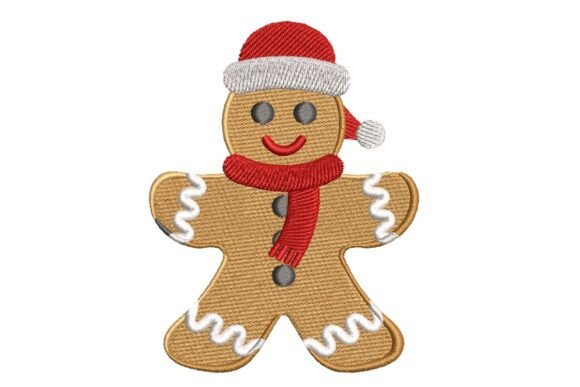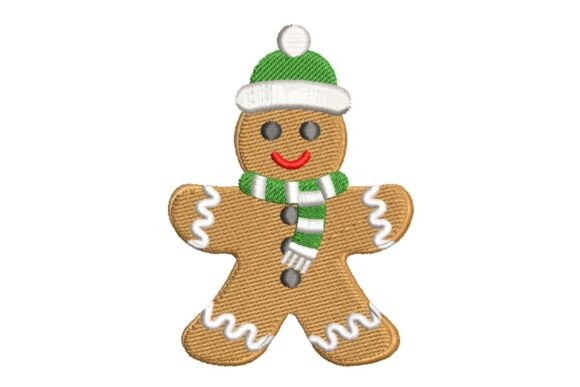
Gingerbread Man Applique Embroidery
A Warm, Whimsical Anchor for Holiday-Made Goods
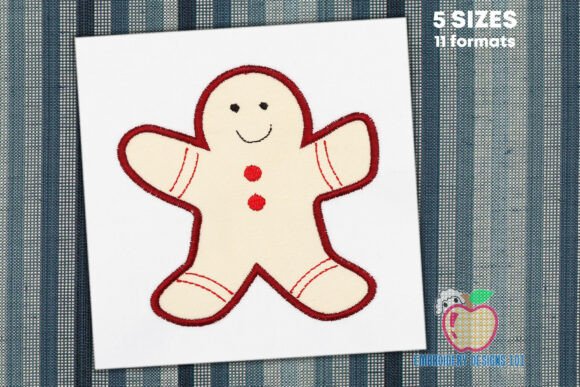
When I opened the Gingerbread Man Applique Embroidery file last week—prepping for a client’s holiday tote bag line—I paused. Not because it was flashy or complex, but because it felt *right*. Friendly, uncluttered, gently rounded, with just enough personality to read clearly at 4 inches and still hold charm at 8. That brown trim isn’t just outline—it’s structure. Those red buttons aren’t afterthoughts—they’re focal points that pop without demanding extra thread changes. As an embroidery designer who’s stitched hundreds of seasonal motifs, I can say this: Gingerbread Man Applique Embroidery lands where many holiday designs fail—it balances simplicity with character, and craft with commercial viability.
Where It Shines (and Why Your Customers Will Notice)
I used it on a natural linen tea towel first—medium-weight, slightly textured, no stretch. With medium tear-away stabilizer and 40-weight polyester thread, the satin stitch along the gingerbread man’s edges stayed crisp, not wobbly. The applique layer sat flat, with clean seam allowances—not puckered or lifted. That matters when you’re selling handmade products: customers touch before they buy. They’ll feel that smoothness, and associate it with care.
It translated beautifully to a midweight cotton sweatshirt too—no distortion around the shoulder seam, even when placed off-center. On baby onesies? Perfect. The scale stays legible without overwhelming tiny garments, and the shape avoids sharp corners that could irritate sensitive skin. For Etsy sellers listing personalized holiday gifts, this design works as both a standalone motif and a supporting element—pair it with a simple “Merry” or “Joy” script, and you’ve got a cohesive, shop-branded set in minutes.
As a small shop product, Gingerbread Man Applique Embroidery adds instant warmth to aprons, pillow covers, and embroidered patches meant for gift tags or ornament backings. Its visual rhythm—rounded body, compact limbs, centered face—creates instant recognition. No squinting required. That’s customer trust built in stitch count.
Where to Pause and Plan Ahead
Not every fabric or surface is its friend. On thin, slippery rayon or lightweight chambray, I recommend basting the applique fabric *before* hooping—and doubling up your stabilizer. The design’s satin-stitched edges rely on stability; without it, you’ll see shadowing or slight waviness near the arms and legs. On dark fabrics, test your thread colors carefully: that brown trim reads as warm chocolate on cream, but can mute to muddy on navy unless you choose a rich, low-sheen brown thread.
Curved surfaces like caps need special attention. I tried it on a structured cotton twill cap at 5 inches—it worked, but only because I used a cap hoop and reduced top tension slightly. Don’t assume it auto-adjusts. And while the design scales cleanly from 4×4 to 8×12 hoops, don’t skip verifying your machine’s max stitch width at the largest size—some older models flag dense fill areas if the design pushes their limits.
Also: avoid placing it directly over seams or darts on fitted apparel. The applique fabric won’t conform like a standard fill stitch, and bulk can build where stitching layers overlap. On layered garments—think reversible jackets or double-knit blankets—test stitch density. Too much fill + too much backing = stiff, un-giftable results.
Design Notes Every Embroiderer Should Check Before Stitching
- Always stitch a test on scrap fabric—especially if using textured weaves, knits, or blends. What looks clean on screen rarely behaves the same on terry cloth or fleece.
- Review stitch density in your embroidery software. If the fill areas look overly tight or sparse, adjust before exporting. Gingerbread Man Applique Embroidery leans balanced, but lighting and fabric absorbency change perception.
- Confirm hoop size compatibility—not just nominal size, but actual usable area. A 6×10 hoop may only offer 5.7×9.7" of real stitching space.
- Inspect small details at full zoom: the button highlights, the curve of the smile, the seam allowance width. These define polish.
- Test in black-and-white mockups to assess contrast and silhouette clarity—critical for digital previews, Etsy listings, and printable mockups.
- Use appropriate stabilizer—light cutaway for knits, medium tear-away for wovens, and fusible + tear-away combo for delicate applique fabrics.
- Verify licensing terms before selling finished items or bundling Gingerbread Man Applique Embroidery into digital embroidery kits. Commercial use isn’t automatic—even for Christmas-themed embroidery files.
More Than a Motif—A Consistent Brand Gesture
What makes Gingerbread Man Applique Embroidery quietly powerful isn’t just its cheer—it’s its reliability across formats. It holds up in a single-color monochrome logo for a boutique’s holiday tagline, reads cleanly on a 2-inch embroidered patch sewn onto a denim jacket, and retains sweetness even when scaled down for a baby bib. That versatility saves time for craft business owners juggling multiple SKUs. You’re not designing five new motifs—you’re refining one strong asset.
For digital product sellers, it’s a smart anchor design: pair it with coordinating borders, snowflakes, or candy cane accents, and you’ve got a themed embroidery pack that feels curated, not cobbled together. Its friendly tone also softens more formal applications—think wedding guest towels or holiday kitchen linens for newlyweds. It doesn’t shout “Christmas!”—it whispers “cozy,” “handmade,” and “thoughtful.”
In short: Gingerbread Man Applique Embroidery earns its place in your working library not because it’s trendy, but because it stitches true, sells well, and feels like something you’d proudly give—or keep.