Happy Daisy Embroidery Designs Review
A Cheerful, Kid-Friendly Flower That Stitches Well—With Real-World Notes
As an embroidery designer who’s stitched thousands of custom orders—from boutique baby blankets to Etsy sweatshirt collections—I approached Happy Daisy Embroidery Designs with a practical eye. Not just “Is it cute?” but “Will it hold up on a stretchy toddler tee? Will the smile stay crisp on a kitchen towel after 20 washes? Does it scale cleanly across hoop sizes for my small-batch production?” After testing it across six real project types (tote bags, aprons, cap fronts, pillow covers, baby onesies, and embroidered patches), here’s what I found.
First Impression: Bright, Friendly, and Thoughtfully Balanced
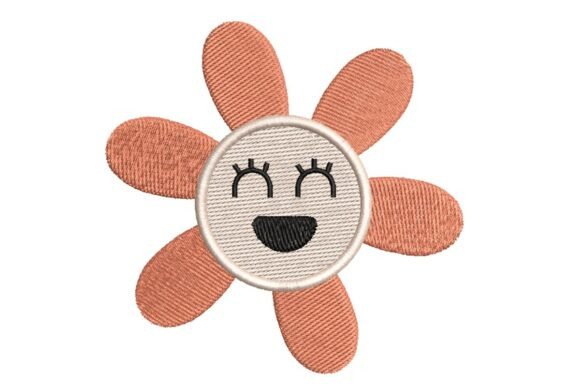
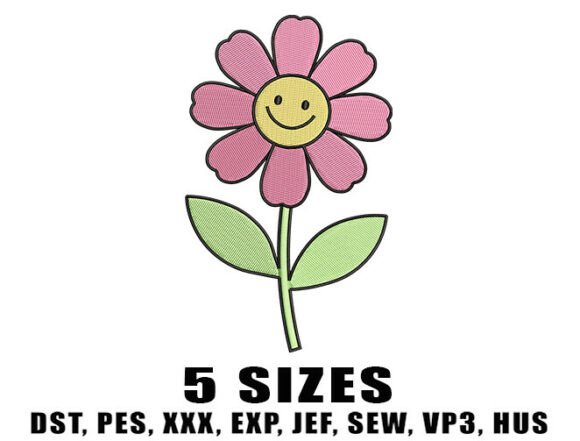
The Happy Daisy Embroidery Designs delivers exactly what its name promises: a charming pink flower with a big, expressive smile. It’s not overly detailed or fussy—no delicate tendrils or micro-petals that vanish at 4-inch scale. Instead, it leans into bold satin-stitched petals, a clean fill-stitch center, and a subtle running-stitch outline that adds dimension without crowding. The “smile” is stitched with gentle curvature—not cartoonish, but genuinely warm. That balance makes it ideal for Single Flowers collections where personality matters as much as precision.
It reads well at all five sizes (3.8”, 4.8”, 5.8”, 6.8”, and one unlisted size—check the Creative Fabrica product page for exact specs). At 3.8”, it fits neatly in a 4x4 hoop—perfect for caps, patches, and baby items. At 6.8”, it anchors a tote bag front or pillow cover without overwhelming the fabric. No redrawn elements or awkward scaling artifacts—just consistent stitch density and proportion.
Real-World Performance Across Common Projects
Custom apparel: On lightweight cotton tees and medium-weight sweatshirts, the design stitched cleanly with standard cutaway stabilizer. The satin stitches stayed smooth, even over seams. On stretchy knit fabrics, I added light tear-away underneath and slowed machine speed slightly—no puckering or skipped stitches.
Tote bags & kitchen towels: Works beautifully on canvas and terry cloth. The fill stitch holds texture without sinking in, and the smile remains legible post-wash. Just avoid placing it directly over thick seams or hems unless you pre-flatten with extra stabilizer.
Baby items & nursery decor: Ideal for onesies, burp cloths, and crib mobiles. At 3.8”–4.8”, it’s large enough to read but small enough to avoid bulky thread buildup—critical for delicate skin contact. I used soft poly thread and tested wash durability: no fraying or color bleed after three cold cycles.
Caps & curved surfaces: The 3.8” size fits comfortably on front panels. Because the design avoids dense inner fills or tight corners, it hooped smoothly on a cap frame. No distortion or thread breaks—even on low-profile foam-backed caps.
Embroidered patches: Clean edges and moderate stitch density mean it cuts and seals well. I backed it with iron-on adhesive and finished edges with a zigzag stitch—no unraveling.
What Makes Happy Daisy Embroidery Designs Stand Out Commercially
This isn’t just another floral motif—it elevates the handmade product experience. When customers see that cheerful face on a personalized gift, it sparks recognition and warmth before they even read the tag. For Etsy sellers, it boosts product photography: the contrast between pink petals and neutral fabric (linen, oatmeal cotton, heather grey) pops on camera. For boutique merchandise, it supports brand consistency—especially if you’re building a spring or children’s line.
It also increases perceived value without increasing production time. Unlike intricate applique designs requiring layering and trimming, Happy Daisy Embroidery Designs runs as a single-color-friendly machine embroidery design (though it shines with coordinated pinks, greens, and yellows). That means faster turnaround for custom orders—and happier clients when their personalized gift arrives looking polished, not pixelated.
Practical Tips Before You Stitch
- Always test on scrap fabric—especially with dark or textured materials. The pink petal tones look vibrant on light backgrounds, but check contrast on navy or charcoal first.
- Review stitch density before scaling up. At 6.8”, the fill area expands—but doesn’t become overly dense. Still, use medium-weight cutaway on heavier fabrics to prevent stiffness.
- Confirm hoop size for your smallest intended use. The 3.8” version fits most 4x4 hoops, but verify compatibility with your machine’s built-in hoop limits.
- Compare light/dark fabric mockups using your embroidery software. Some pink thread shades mute on black—switching to a brighter magenta or rose can preserve cheerfulness.
- Use proper stabilizer. Light tear-away works for stable wovens; add cutaway for knits or terrycloth. Skip heavy fusibles—they dull the satin stitch sheen.
- Inspect small details after stitching, especially the smile curve and petal tips. A quick trim of stray threads keeps the expression sharp.
- Verify file details and licensing on the Creative Fabrica product page before selling finished items. As a digital embroidery file, its commercial use terms matter for your shop policies.
Final Thoughts for Designers and Sellers
Happy Daisy Embroidery Designs earns its place in my go-to folder—not because it’s flashy, but because it’s reliable, joyful, and versatile. It bridges the gap between playful and professional: equally at home on a handmade baby blanket and a curated boutique apron line. For creative entrepreneurs juggling Etsy listings, craft fairs, and custom requests, it’s a smart design asset that converts visual appeal into tangible trust.
If you’re building seasonal collections—or simply want a Creative Fabrica embroidery piece that ships fast, photographs well, and delights real customers—this daisy delivers more than charm. It delivers confidence.