Candy Corn Mini Embroidery
First Impression: Sweet, Simple, and Instantly Seasonal
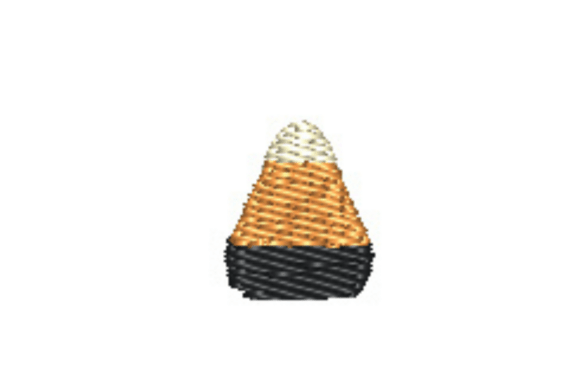
As an embroidery designer who’s prepped over 200 craft fair booths, my first thought when I see Candy Corn Mini Embroidery is: “Yes—this lands.” It’s not fussy. It’s not trying to be clever or ironic. It’s a clean, three-color stripe in the unmistakable shape of a corn kernel—small enough for the tiniest hoop, yet bold enough to read from three feet away. It reads as festive, not frantic; handmade, not mass-produced; autumnal without leaning too hard into Halloween kitsch. That balance is gold at a craft fair—where shoppers scan dozens of tables in under 90 seconds.
Where It Shines: Product Placement That Converts
This isn’t a design that needs center stage—it thrives as a quiet signature. On a natural linen tea towel? Perfect near the corner or folded edge: subtle but unmistakably intentional. On a cotton tote bag? Ideal for the lower right front panel—just large enough to catch light and curiosity, never overwhelming the fabric. As an embroidered patch? A standout on denim jackets, canvas pouches, or even kids’ backpacks—especially when backed with iron-on adhesive for easy application.
For aprons, I place Candy Corn Mini Embroidery just above the pocket—small enough to avoid bulk, large enough to feel considered. On structured caps, it works best on the front curve *only* if you’ve tested stitch tension on curved surfaces first (more on that below). Pillow covers? Top-left corner, 1.5” from the seam—elegant, seasonal, and gift-ready. And for market bags or small drawstring pouches? It’s the ideal finishing touch—adding handmade value without adding production time.
Photography & Online Appeal: Why It Sells on Etsy and Instagram
Candy Corn Mini Embroidery photographs exceptionally well—especially against neutral backdrops (cream, oat, charcoal). Its high-contrast color stripes pop on camera without needing filters, and its compact size ensures crisp detail even in thumbnail views. As an Etsy seller, I use it in printable mockups for digital listings—pairing it with rustic wood textures or soft knit backgrounds to reinforce its handmade authenticity. It also scales beautifully across design assets: one embroidery file becomes a cohesive collection—tea towel + pouch + patch—all unified by the same sweet, seasonal motif.
Production Reality Check: What Makes This Design Booth-Ready
Let’s be real: not every cute machine embroidery design survives batch production. But Candy Corn Mini Embroidery does—because it’s built for efficiency. With only three colors and no fine lettering or dense fill areas, thread changes are minimal, stitch density is low-to-moderate, and hooping is fast—even on tight deadlines. It’s repeatable, reliable, and forgiving across fabric types… *if* you respect its limits.
Careful-Use Notes: Protect Your Stitch Quality
- Small hoop dependency: Since it’s made for “the smallest of hoops,” don’t force it into a 4x4 hoop unless you’ve confirmed spacing and jump stitches won’t compromise clarity.
- Fabric texture matters: Avoid heavy terry cloth or thick quilted towels—the design can blur. Stick to smooth cotton, linen, lightweight canvas, or stable knits.
- Dark fabric warning: The classic candy corn palette (white/orange/yellow) loses impact on black or navy unless you swap yellow for gold or add a white underlay. Always test thread contrast.
- Curved surfaces need prep: Caps and curved pouches require cutaway stabilizer and reduced top tension—otherwise, those crisp stripes will pucker or distort.
- No tiny details to lose: Good news—there aren’t any. No micro-text, no gradients, no fragile outlines. What you see in the file is what you’ll get in the finished product.
Booth Impact: How It Elevates Your Handmade Product Line
In a sea of pumpkin prints and spooky fonts, Candy Corn Mini Embroidery stands out by being *refined*. It signals craftsmanship—not just holiday trend-chasing. When customers see it on a hand-stitched pillow cover beside a minimalist mug or a locally woven market bag, it quietly reinforces your brand as thoughtful, seasonal, and quality-forward. At craft fairs, it draws the “I want something special but not silly” buyer—the one who buys two items instead of one because they trust your aesthetic.
It also strengthens booth cohesion. Use it across three product categories—say, a set of embroidered tea towels, matching patches, and a limited-run of aprons—and suddenly your table tells a story. That consistency builds recognition, encourages bundles, and makes your small shop product feel like part of a curated collection—not a grab-bag of holiday odds and ends.
Designer Must-Dos Before You Stitch a Single Piece
- Test the machine embroidery design on scrap fabric *exactly* like your final product—same thread, same stabilizer, same hoop size.
- Check spacing: Does the design sit cleanly on your chosen placement (e.g., 0.75” from hem or seam)? Adjust if needed.
- Review stitch density visually—not just in software. Dense fills trap moisture and add stiffness; this design shouldn’t.
- Use cutaway stabilizer for stretchy or textured fabrics; tear-away works fine for stable cottons and linens.
- Create at least one real-world mockup—not just digital. See how light hits the threads, how it feels in hand, how it pairs with your packaging.
- Compare thread colors across fabric bases: white on ecru vs. white on oat looks different. Document your pairings.
- Confirm commercial licensing status before selling finished products—especially if you’re an Etsy seller or wholesaling to boutiques.
Final Thought: A Small Design With Big Craft Fair Returns
Candy Corn Mini Embroidery isn’t just another Halloween-themed embroidery file—it’s a strategic asset. It’s quick to stitch, easy to photograph, versatile across product types, and emotionally resonant without being cloying. For the handmade product maker juggling craft fair prep, Etsy uploads, and wholesale deadlines, it’s the kind of design that earns repeat customers, inspires cross-sells, and quietly says, “I pay attention—to detail, to seasonality, and to what makes something feel truly made.” In a crowded market, that’s not just smart embroidery. It’s smart business.