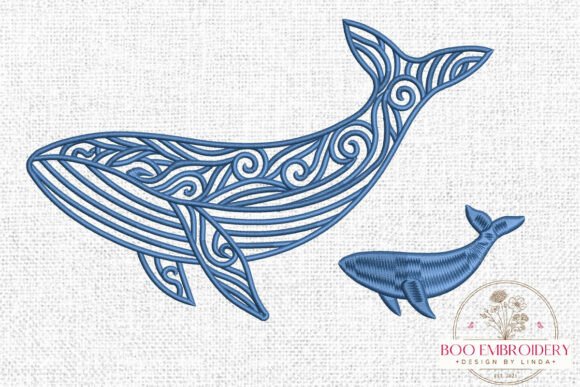
Tribal Whale Embroidery Design
First Impressions: Bold, Playful, and Surprisingly Versatile
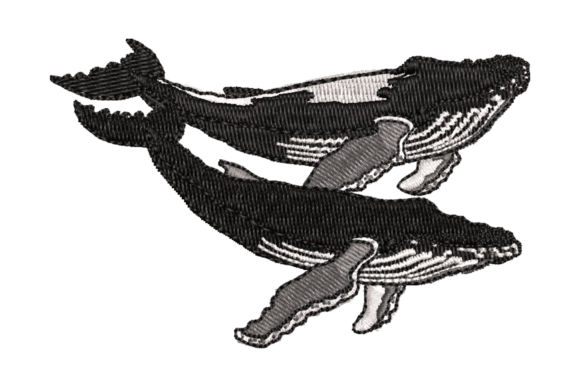
When I opened the Tribal Whale Embroidery Design file, I wasn’t expecting such a strong sense of rhythm and intention. This isn’t just a cartoon whale—it’s a stylized, confident silhouette with clean tribal lines, subtle curvature, and intentional negative space. The shape reads instantly at a glance, even in small sizes, which matters when you’re stitching onto a baby onesie or a curved cap front. It feels handmade without looking amateurish—like something you’d see on a boutique apron or a limited-run sweatshirt for a coastal indie brand. The “fun and quirky” description is accurate, but it undersells the design’s quiet sophistication. It leans into charm without tipping into cutesy—and that balance is rare in fish-themed embroidery files.
A Real Project Test: Stitching It onto a Linen-Cotton Tea Towel
Last week, I used the Tribal Whale Embroidery Design to create a set of kitchen towels for a local café’s holiday pop-up. We chose natural linen-cotton blend towels—textured, slightly uneven, and unforgiving for dense fill stitches. I hooped them with medium-weight tear-away stabilizer and ran a quick test on scrap first. The design stitched cleanly: no thread breaks, no puckering, and the satin stitch along the whale’s outline held crisp definition against the fabric’s grain. What surprised me was how well the tribal motifs translated in monochrome thread—especially charcoal gray on off-white. Customers kept picking up the towels just to trace the lines with their fingers. That tactile response? That’s when you know a machine embroidery design has real presence.
Where It Shines (and Where It Needs Thought)
- Custom apparel: Works beautifully on midweight cotton tees and relaxed-fit sweatshirts—especially centered on the chest or left sleeve. Avoid ultra-thin ring-spun fabrics unless you reduce stitch density or add cut-away stabilizer underneath.
- Tote bag design & aprons: Strong visual impact at 4–5 inches wide. Holds up well on canvas and duck cloth, and the bold outline prevents “disappearing” on busy prints.
- Baby embroidery & nursery decor: Gentle enough for onesies and burp cloths—but double-check corner curves if stitching near seams. A smaller-scale version would be ideal for bibs.
- Embroidered patch: Excellent candidate for iron-on or sew-on patches. Clean edges mean sharp cutting post-stitch, and minimal underlay keeps it flexible.
- Holiday embroidery & personalized gifts: Paired with a simple name script or seasonal motif (think tiny pine boughs or snowflakes), it adds character without overwhelming. Great for teacher gifts, new parent bundles, or coastal-themed weddings.
Fabric & Fit Notes You’ll Actually Use
This isn’t a one-size-fits-all embroidery file—and that’s a good thing. On dark fabric, I recommend switching to matte thread (like polyester matte or rayon) to avoid glare that flattens the tribal texture. On stretchy knits, use a light fusible stabilizer *before* hooping—otherwise, those clean lines can distort on the bias. And while the design avoids tiny lettering or micro-details, don’t rush it onto a curved surface like a baseball cap without testing hoop placement first; the whale’s tail curls slightly, and misalignment there breaks the flow.
Also worth noting: the stitch density feels balanced—not sparse enough to look cheap, not heavy enough to stiffen lightweight tea towels or baby blankets. That makes it safer for items meant to be washed regularly, though I still advise gentle cycles and air drying for finished products.
For Craft Business Owners & Etsy Sellers
If you’re listing this as part of your digital embroidery file shop or bundling it into physical kits, Tribal Whale Embroidery Design adds instant personality without requiring advanced digitizing skills to adapt. It scales well from 3" to 6", so you can offer multiple size options—or pair it with coordinating elements (waves, coral, sun motifs) for themed collections. As a small shop product, it helps build brand consistency: think matching tote + towel + pillow cover sets for a seaside cottage aesthetic.
Customers respond to its clarity and warmth. In mockups, it reads as both modern and timeless—no dated trends, no overused clichés. That builds trust. When someone buys a handmade product featuring this design, they’re not just buying embroidery—they’re buying intention, cohesion, and quiet confidence.
Practical Designer Checks Before You Stitch
- Test the Tribal Whale Embroidery Design on scrap fabric *first*, especially if using textured or dark material.
- Review thread colors against your base fabric in natural light—not just screen previews.
- Confirm hoop size compatibility. If your machine maxes out at 4x4, check whether the full design fits—or if you’ll need to resize.
- Inspect corners and curves in your embroidery software. Look for any overlapping stitches or unusually tight angles that could snag.
- Try a black-and-white printable mockup to assess contrast and legibility before committing to thread.
- Use proper stabilizer for your fabric type—don’t assume tear-away works for everything.
- Verify licensing terms before selling finished embroidered items or reselling the digital embroidery file. Commercial use isn’t automatic.
Final Thought: Charm With Craftsmanship
The Tribal Whale Embroidery Design earns its place in my go-to folder—not because it’s flashy, but because it delivers quietly, consistently, and with integrity. It respects the craft: no excessive jump stitches, no fragile details that vanish after two washes, no visual noise that competes with the fabric itself. Whether you’re an Etsy seller building a cohesive collection, a small shop owner refreshing seasonal merchandise, or a designer prepping client samples, this is a fish-themed embroidery file that behaves like a professional tool—not just decoration. It reminds me why I love this work: the right design doesn’t shout. It invites. It fits. It feels like it belongs.